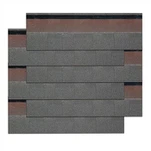
Asphalt shingle is a new type of high-tech waterproof building material, and it is also a new type of roofing material used in building roof waterproofing. Asphalt shingles are also known as fiberglass tiles, linoleum tiles, and fiberglass asphalt shingles. The use range of asphalt shingles is not only for villas, it can be used as long as it can meet the construction requirements: cement roof thickness not less than 100mm, wooden structure roof not less than 30mm, in addition to all the functions of the tile, it Another feature is that it is especially suitable for roofs with slopes of 5-90 degrees and roofs of any shape.
What are the advantages of asphalt shingles?
1. All-weather performance: Continuous research and testing of products and application technologies have proved that asphalt shingles can withstand the erosion caused by sunlight, rain, freezing and other climatic factors.
2. Thermal insulation: The low thermal conductivity of Ornex asphalt shingles blocks the heat conduction from the outside to the inside in summer and the dissipation from the inside to the outside in winter, thus ensuring a comfortable life for the residents on the top floor.
3. Sound absorption and sound insulation: Asphalt shingles can absorb environmental noise such as raindrop impact, so as to ensure the quiet life of the residents on the top floor.
4. Corrosion resistance: Asphalt shingles will not rust and variegated under the influence of acid rain and other harsh urban environments.
5. Dust-proof and self-cleaning performance: Asphalt shingles will not form obvious stains due to dust accumulation, and will not accumulate water stains even under long-term rain conditions. After being washed by rain, it will look cleaner and brighter.
6. Durability and low maintenance rate: Asphalt shingles have a long service life, ranging from 25 to 40 years. If installed correctly, the asphalt shingle roof requires minimal or no maintenance.
7. Diverse shapes: Asphalt shingles are flexible tiles that can be paved into traditional roof tiles with special shapes such as cones, spheres, and arcs.
8. Simple paving: 50-60 flats/per job. Except nails, no other auxiliary materials are needed in the paving process, and the roof ridge, gutter and eaves are superimposed by the tile body itself.
9. The roof is light-bearing: the material used for paving the roof per square meter is about 10 kilograms. Compared with traditional cement tiles, 45 kg/m² is definitely a qualitative leap. The lighter weight of the product also provides a guarantee for construction safety.