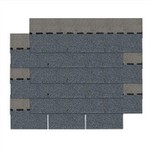
There are two types of asphalt tiles, one is mixed with rainwater asphalt, and the other is mixed with asphalt mixture in a dispersed form. Their mixing methods are different, and their processing forms and processing specifications are also different.
There are currently two main forms. The first is to form direct asphalt shingles through de-sanding, de-asphalting, and defoaming operations in advance; the second is to pour asphalt shingles on-site, using settled fillers, and then undergo degumming, deasphalting and defoaming. Treatment formation.
If the asphalt shingles are processed in a design institute, this is not difficult. If you are doing structural design in a construction company, you can make structural drawings and find a professional structure manufacturer. The older one has Detmund processing, and the newer one. There are small tile workshops, rental tile workshops, and rented processing factories.
Then there is the study of prestressed fault fracture. Various glass fibers and even ceramic fibers are mixed back and forth. Various coatings, steel mesh, white powder, etc. are all made up, and the design can be used. There are two types of asphalt shingles. One is Rainwater asphalt is mixed, called rainwater asphalt shingle.
The other is to pour asphalt shingles on site, use settlement fillers, and then undergo degumming, deasphalting and defoaming treatments. On-site construction of asphalt shingles is relatively dry on-site. It becomes mud and pours it into Warri.
Asphalt shingle processing method The on-site construction of asphalt shingles is not affected by weather factors. It is usually processed by dry method, but also can be processed by wet method or wet method. For wet production, dry processing and dry processing are generally the raw materials first. A variety of cement powdered raw materials, coke powdered raw materials, ingredient powdered raw materials, hydrated organic matter, wheat bran powdered raw materials, etc. are mixed into mud to form high-density granules, and then the low-density granules are ground and mixed into the powder Stir in the middle, further crushing, extruding, sieving, mixing into the brick core or outer bedding.